
Newcastle is not naturally thought of as a rock music city in the way that London, Manchester, or Liverpool are. There’s no scene-defining moment, no record label that shaped a generation, no street that every musician lived on. And yet the city has produced some of the most significant and improbable musical figures in British and international rock history, alongside a contemporary scene that continues to generate artists of genuine quality. The common thread is a particular kind of resilience and directness that is distinctly Geordie.
Brian Johnson and the AC/DC Connection
Brian Johnson was born in Dunston, Gateshead in 1947. Before he replaced Bon Scott as the vocalist of AC/DC in 1980 – becoming one of rock music’s most unlikely success stories – he was the singer of Geordie, a glam rock band from Newcastle that had UK chart success in the early 1970s. Johnson’s story is quintessentially Geordie: a car windscreen fitter and musician of no great expectation who went to Melbourne for an audition and ended up fronting one of the biggest rock bands in the world. The Newcastle voice never left him. It remains as thick on every AC/DC record as it was on the first day.
Sting and Wallsend
Gordon Sumner – Sting – was born in Wallsend in 1951. His father worked in the nearby Swan Hunter shipyard and Sting trained as a teacher before music took over. The Tyne, the shipyards, and the particular working-class North East world he grew up in have informed his music in ways that are sometimes explicit – the song about the shipyards, the working-class imagery that runs through the early Police records – and sometimes more subliminal. He left for London and then for the world, but Wallsend has claimed him as fiercely as any city claims a famous son.
Maximo Park and the 2000s Indie Moment
Maximo Park emerged from Newcastle in the early 2000s as part of the post-punk revival that produced The Strokes, Interpol, and Franz Ferdinand. The band’s debut album, A Certain Trigger in 2005, was one of the significant British indie albums of the decade. The band’s Newcastle identity – articulate, slightly awkward, more interested in ideas than cool – was evident in the music. They’re still going.
Sam Fender
Born in North Shields in 1994, Sam Fender is the most significant Newcastle-connected musician to emerge in the past decade. His debut album Hypersonic Missiles in 2019 established him as an artist with something serious to say about the post-industrial North East, drawing explicitly on the Tyne’s landscape and the social conditions of the communities that grew up around it. The Springsteen comparisons followed immediately and weren’t entirely wrong. His second album, Seventeen Going Under, was one of the most streamed British albums of 2021. He sells out St James’ Park. He is as Geordie as anything.
The Sage Gateshead and the Contemporary Scene
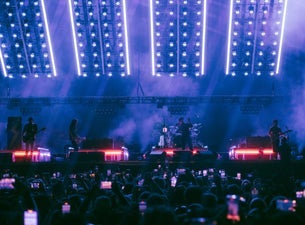
The Sage Gateshead – the Norman Foster music centre on the south bank of the Tyne – has provided the infrastructure that supports Newcastle’s contemporary music scene alongside its role as a classical and jazz venue. The combination of the Sage, Digital, the Cluny, and the Utilita Arena gives Newcastle a more complete music venue ecosystem than most UK cities of its size. The scene that produces the next Sam Fender is developing in those spaces now.
Corrections
Spotted something wrong? Send a correction.